
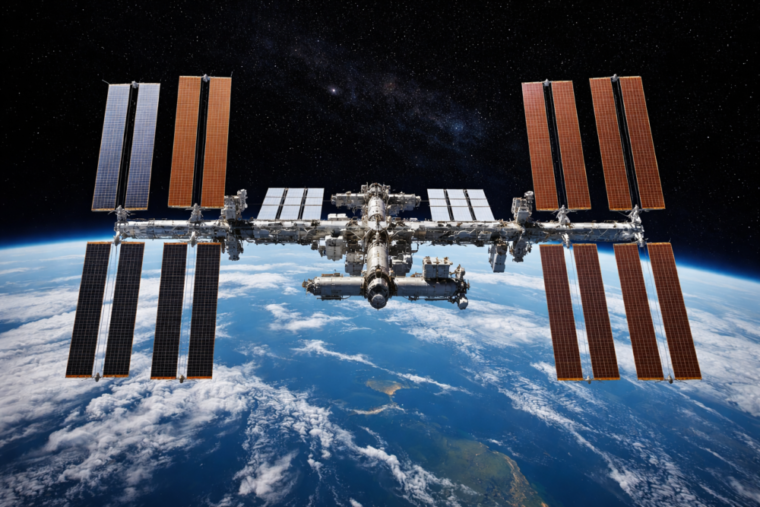
The risk of falling space junk hitting airplanes is possible, but experts say it remains extremely rare. However, global space activity is rising fast, which keeps safety agencies watchful. Meanwhile, commercial aviation continues to expand across busy regional skies, including India. Therefore, the overlap between air routes and re-entering debris draws public attention. Moreover, recent controlled rocket reentries renewed online searches about aircraft safety. As a result, aviation regulators and space agencies share data more closely than before.
Space junk includes defunct satellites, rocket stages, and mission fragments orbiting Earth. However, most debris burns during atmospheric reentry due to intense heat. Meanwhile, only stronger components survive long enough to reach lower altitudes. Therefore, the chance of debris intersecting an aircraft corridor stays extremely low. Moreover, global airspace covers vast areas, while debris paths are narrow and brief. As a result, probability remains tiny according to published assessments.
Experts often compare the risk to winning a lottery multiple times. However, numbers alone do not end public concern. Meanwhile, viral videos and dramatic headlines fuel fear during reentry events. Therefore, newsrooms now focus on explaining context and science. Moreover, aviation safety records show no confirmed case of space debris striking a passenger aircraft. As a result, airlines continue operations even during most reentries.
The Earth’s atmosphere acts as a powerful shield. However, reentering objects can travel at several kilometers per second initially. Meanwhile, friction rapidly slows and heats the debris. Therefore, most material vaporizes above 60 kilometers altitude. Moreover, aircraft usually cruise near 10 to 12 kilometers altitude. As a result, debris and airplanes occupy different layers for most events.
Still, space agencies do not ignore the risk. However, they track large objects with ground radar and telescopes. Meanwhile, reentry predictions improve with better models and data sharing. Therefore, agencies can issue short airspace advisories if needed. Moreover, these advisories are targeted and time-limited. As a result, flight disruptions remain minimal.
India’s aviation market ranks among the world’s fastest growing. However, the country also expands its space program through ISRO. Meanwhile, coordination between civil aviation and space authorities has strengthened. Therefore, NOTAMs can be issued during sensitive windows. Moreover, these notices guide pilots without causing panic. As a result, safety margins remain high over Indian skies.
Internationally, organizations like ICAO play a coordinating role. However, space activity spans national borders, complicating oversight. Meanwhile, the United States Space Force tracks thousands of objects daily. Therefore, shared catalogs support global risk assessments. Moreover, Europe and Asia contribute independent tracking networks. As a result, detection accuracy improves each year.
Public questions often ask whether debris can fall directly onto flight paths. However, reentries follow predictable orbital tracks. Meanwhile, air traffic controllers manage routes dynamically. Therefore, controllers can adjust paths briefly if alerts arise. Moreover, such adjustments already occur for storms or military exercises. As a result, debris alerts fit existing safety systems.
Another common question concerns uncontrolled reentries. However, even uncontrolled events spread fragments over wide areas. Meanwhile, the ocean covers most of Earth’s surface. Therefore, debris statistically falls into water far more often. Moreover, populated regions occupy a smaller fraction of land. As a result, human exposure remains minimal.
Some past incidents fuel anxiety. However, space debris has struck buildings and farmland before. Meanwhile, no injuries from aircraft impacts are documented. Therefore, historical evidence supports current safety claims. Moreover, insurers monitor risks closely due to liability concerns. As a result, policies reflect confidence in low probability.
Scientists also study micro-debris and paint flakes. However, such tiny particles burn completely at high altitudes. Meanwhile, they pose no threat to aircraft structures. Therefore, concern focuses on large rocket components. Moreover, these components are tracked until reentry. As a result, surprises are rare.
Environmental groups raise another angle. However, aluminum oxide from burning debris affects upper atmosphere chemistry. Meanwhile, research continues on long-term climate impacts. Therefore, agencies explore cleaner propulsion and disposal methods. Moreover, satellite operators plan controlled deorbits increasingly. As a result, sustainability discussions gain urgency.
Commercial space launches add complexity. However, private firms now launch hundreds of satellites yearly. Meanwhile, mega-constellations increase orbital congestion. Therefore, debris mitigation rules tighten worldwide. Moreover, end-of-life plans become licensing requirements. As a result, future debris growth may slow.
Pilots receive training on unusual hazards. However, debris risk rarely appears in cockpit decision-making. Meanwhile, automated systems flag airspace advisories. Therefore, pilot workload remains manageable. Moreover, safety culture emphasizes redundancy. As a result, multiple layers protect passengers.
Aviation analysts stress perspective. However, turbulence, weather, and bird strikes present higher risks. Meanwhile, these risks are managed daily. Therefore, focusing excessively on space junk may distort public understanding. Moreover, transparent communication builds trust. As a result, informed travelers feel reassured.
Governments also consider legal frameworks. However, liability for space damage falls under international treaties. Meanwhile, claims are rare and complex. Therefore, prevention remains the priority. Moreover, better design reduces surviving debris mass. As a result, exposure decreases further.
Technology promises further improvements. However, AI-assisted tracking refines predictions. Meanwhile, real-time data sharing shortens response times. Therefore, coordination between sectors strengthens. Moreover, cloud-based systems aid regional authorities. As a result, safety responses become faster.
In summary, the risk of space junk hitting airplanes exists in theory. However, evidence shows it remains extremely unlikely. Meanwhile, rising launches keep regulators vigilant. Therefore, continuous monitoring and coordination continue worldwide. Moreover, India’s growing aviation and space sectors align on safety. As a result, passengers can fly with confidence, grounded in facts rather than fear.

Siddharth is a Kochi-based mechanical engineer with a lifelong fascination for cars. His weekend passion involves analyzing new engines, driving technologies, and India’s growing electric car market. He brings technical depth with everyday readability.