
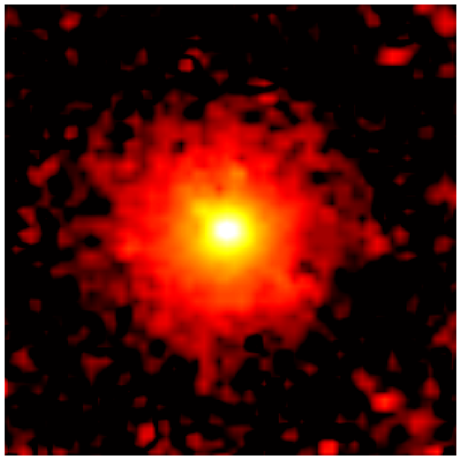
NASA is carrying out a historic space observation campaign to study comet 3I/ATLAS, only the third known interstellar object to pass through our solar system. Unlike normal comets that come from our own solar neighborhood, this one was formed around another star, making it extremely valuable for scientists.
Since its discovery on July 1, a total of 12 NASA spacecraft and telescopes have been observing the comet from different parts of the solar system. By looking at 3I/ATLAS from many angles and distances, NASA hopes to understand how it differs from typical comets and what it can tell us about planets and stars in other systems.
Closest Views from Mars
Some of the clearest pictures came from NASA’s machines orbiting and roving on Mars.
-
The Mars Reconnaissance Orbiter (MRO) took one of the closest images.
-
The MAVEN spacecraft captured ultraviolet views to help scientists understand the comet’s chemical makeup.
-
Even the Perseverance rover on the Martian surface managed to spot a faint view of the comet in the sky.
Watching the Comet Near the Sun
Some NASA missions can look at space regions very close to the Sun, where normal telescopes on Earth cannot point.
-
The STEREO spacecraft observed the comet from Sept. 11 to Oct. 2.
-
The SOHO mission (run by NASA and ESA) watched it from Oct. 15 to 26.
-
The new PUNCH mission captured detailed images of the comet’s tail.
This is the first time NASA’s Sun-focused (heliophysics) missions have intentionally observed an object that came from outside our solar system.
Asteroid Missions Join the Effort
NASA’s Psyche and Lucy spacecraft—on missions to study asteroids—also caught views of the comet as they traveled through space.
-
Psyche observed the comet on Sept. 8 and 9 from 33 million miles away.
-
Lucy took images from 240 million miles away on Sept. 16, helping scientists study the comet’s glowing coma and long tail.
Telescopes on Earth and in Space Also Contribute
-
The comet was first discovered by the ATLAS telescope in Chile.
-
Later, NASA’s Hubble Space Telescope, James Webb Telescope, and SPHEREx also captured detailed images.
What Happens Next?
Comet 3I/ATLAS will make its closest approach to Earth on Dec. 19, but it will still be 170 million miles away—almost twice the distance between Earth and the Sun. NASA will continue tracking it as it moves toward the orbit of Jupiter in spring 2026.
This rare visitor from another star system may help scientists learn entirely new things about how planets and comets form across the universe.

Riya is a Jaipur-based data analyst who follows global tech developments with the same enthusiasm she has for numbers. She writes crisp, research-backed tech stories and enjoys simplifying complex industry updates for everyday readers.