
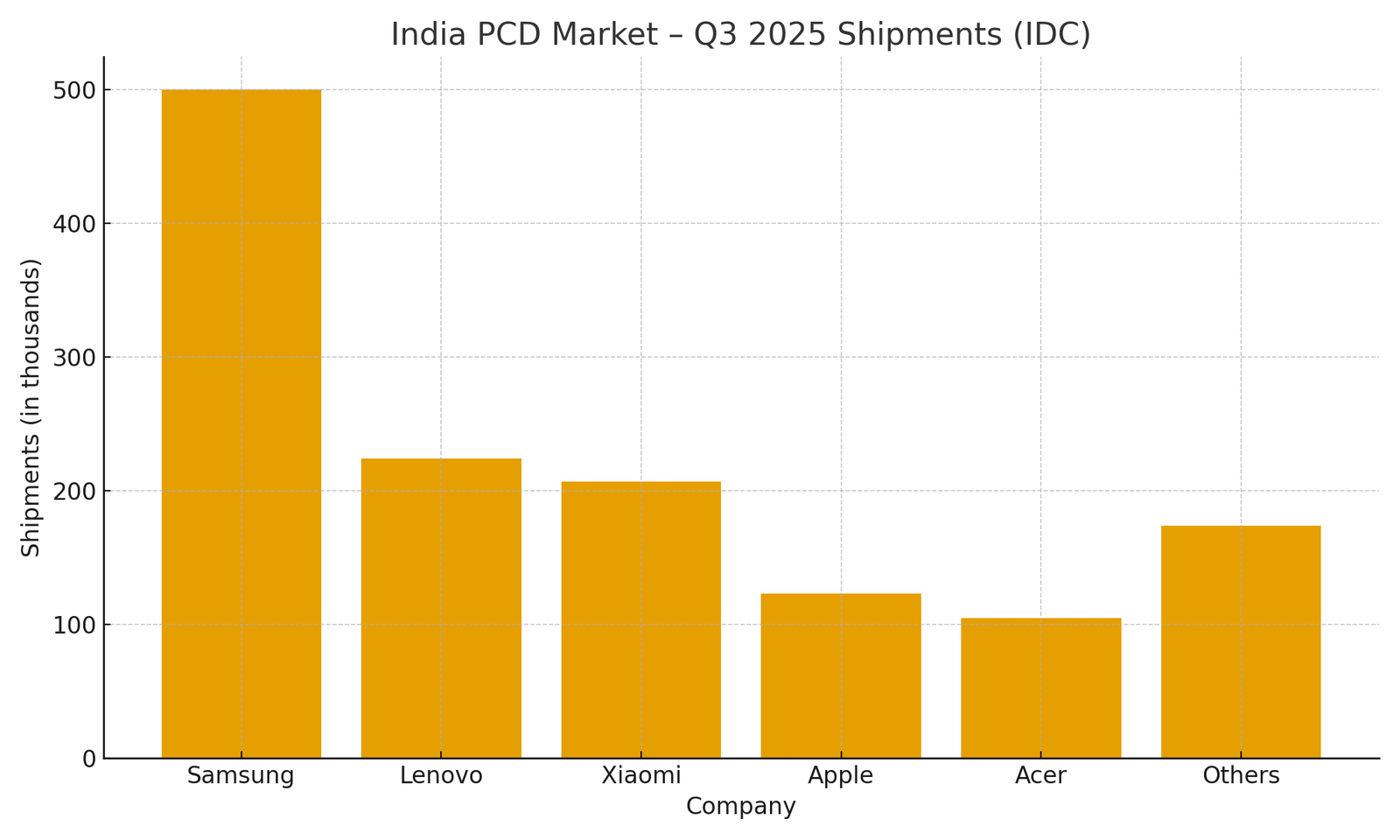
India’s tablet market shipped 1.33 million units in Q3 2025. IDC reports a 19.7% year-over-year decline, even as consumer demand touched its strongest level in over ten years. The market includes slate tablets and detachable tablets, which continue to shape India’s evolving digital ecosystem.
Detachables grew 7.3% YoY, powered by rising demand for productivity devices. This gain, however, could not offset the sharp 29.4% YoY drop in slate tablets. The bigger drag came from the commercial segment, which saw a steep 53.5% fall in shipments. Despite this setback, India’s consumer market recorded strong growth and delivered its best Q3 in more than a decade.
Consumer Market Surges During Festive Season
The consumer segment jumped 13.5% YoY, driven by an early festive cycle and deeper online penetration. Brands pushed heavy sell-in plans with bold discounts, card offers, and attractive exchange deals. These tactics improved demand across Tier-II and Tier-III cities. Fresh product launches and new color variants also supported the surge.
Consumers preferred models bundled with keyboards and stylus pens. Many buyers used large online festival sales to upgrade older devices at lower prices. Vendors also ran aggressive ad campaigns on social media, which boosted awareness in young buyers.
In contrast, commercial demand continued to shrink. Many institutions delayed purchases as budgets remained tight. The education segment declined 61.9% YoY due to postponed state deployments. SMB demand also fell 47.9% YoY, driven by rising cost pressure and longer tablet refresh cycles.
E-Tail Channels Drive Massive Growth
Online channels remained the strongest performer in Q3 2025. E-tail platforms posted 53.9% YoY growth and captured a larger chunk of consumer shipments. Faster delivery, wider options, and strong cashback offers helped online portals attract first-time buyers. Affordable 4G and 5G models also gained good traction on e-tail platforms.
IDC analyst Priyansh Tiwari said the festive rush expanded tablet use in smaller towns. He noted that tablets are becoming useful for content creation and school work when paired with accessories. He also warned that channel inventory remains high and may need correction ahead of Q4.
Market Leaders in Q3 2025
Samsung held the top spot with a 37.5% share in Q3 2025. Samsung led both consumer and commercial segments. Its leadership came from large education wins and heavy stock pushes on online channels. Samsung also promoted many mid-range models during festival sales, which improved its reach among students and freelancers.
Lenovo ranked second with a 16.8% share. Lenovo gained strong ground with its Motorola-branded models that attracted younger buyers. Stylish designs and competitive pricing helped Lenovo grow in the consumer segment. Lenovo also improved its presence in corporate orders with better enterprise support.
Xiaomi placed third with a 15.5% share. Xiaomi benefited from strong festival discounts, exchange bonuses, and accessory bundles. Xiaomi’s broad reach across online platforms helped the brand maintain strong consumer traction.
Apple secured fourth place with a 9.2% share. Apple faced tough competition from Android-based brands in lower price bands. Still, Apple maintained steady enterprise and education demand. Many institutions continued to buy iPads for long-term digital learning plans.
Acer ranked fifth with a 7.9% share, supported by strong education shipments. Acer captured 26.4% of the commercial segment after completing several education deals. Acer also improved its position in multinational corporations that needed long-lasting devices for field workers.
Market Outlook
IDC’s Bharath Shenoy said India’s tablet market continues to adapt to new use cases. He added that tablets now offer better productivity due to new AI tools. These tools improve writing, translation, and document work. Rising PC prices may also push more buyers toward tablets.
Government programs may also turn to affordable tablets as PC substitutes. This shift could help vendors stabilize commercial demand in upcoming quarters.

Meera works full-time as a UX designer in Bengaluru. She writes part-time for the platform, sharing insights on smartphone launches, digital trends, and user-focused tech. Her passion lies in helping readers understand tech in a simpler, more human way.