
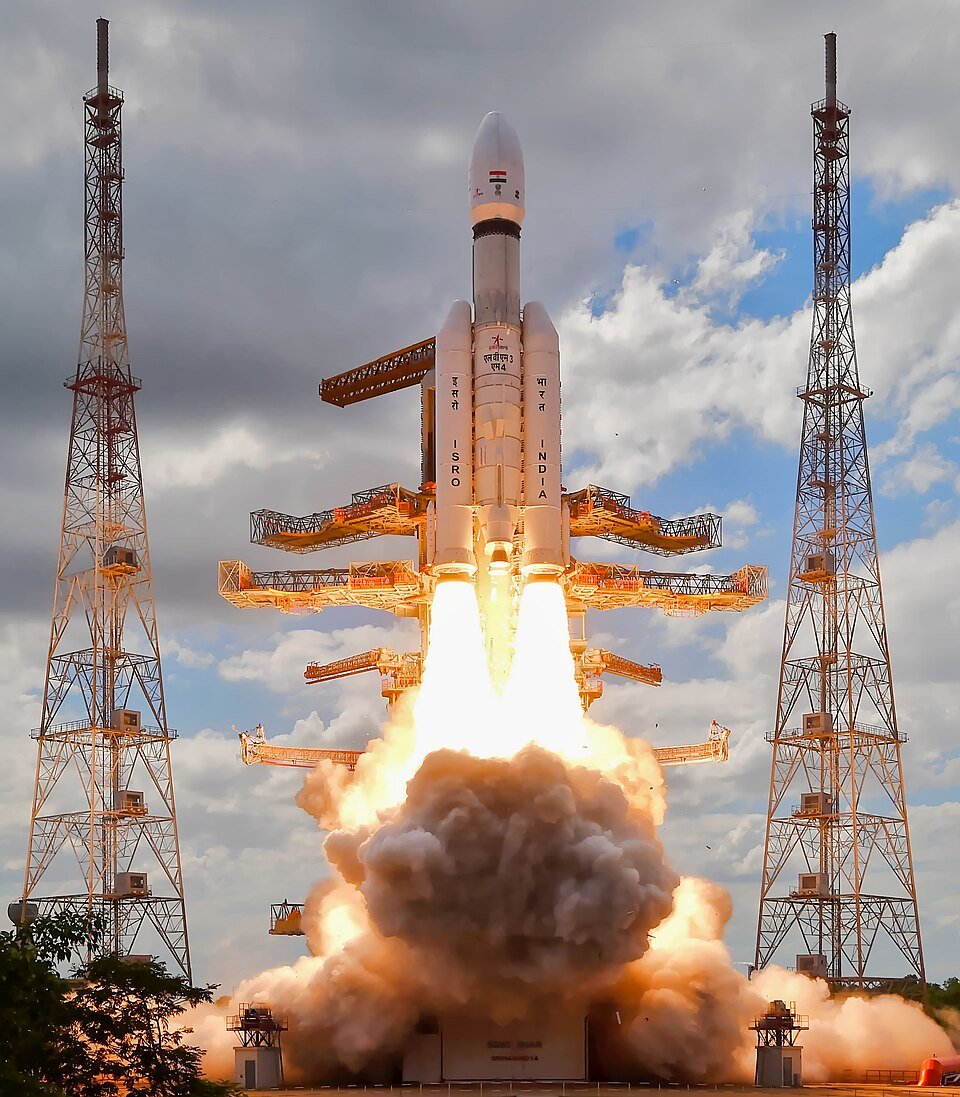
India’s space sector marked a decisive year in 2025 with focused missions, steady launches, and deeper global relevance. The Indian Space Research Organisation advanced science goals while strengthening national capability. Meanwhile, private players expanded roles across launch, satellites, and services. Together, these moves reshaped India’s space standing. As a result, policymakers, scientists, and industry aligned around long-term growth. Importantly, missions stayed on schedule despite tight budgets. Moreover, technology upgrades improved reliability and reach. This report reviews the year’s milestones with verified facts. It also explains why 2025 mattered for India’s space future.
India began 2025 with confidence after consistent launch success in previous years. Early planning focused on operational stability and data-driven missions. Consequently, ISRO prioritised Earth observation, navigation, and human spaceflight readiness. At the same time, the government pushed reforms for private participation. Therefore, regulatory clarity improved across licensing and spectrum use. These changes encouraged startups and investors. Meanwhile, regional demand for space services increased. Thus, India positioned itself as a dependable partner.
The lead story of 2025 remained India’s steady launch cadence. The Polar Satellite Launch Vehicle continued as a trusted workhorse. During the year, PSLV missions placed multiple satellites into precise orbits. Each launch supported weather tracking, agriculture planning, and disaster response. Furthermore, the vehicle’s reliability sustained global confidence. International customers again selected India for cost-effective access to space. As a result, launch revenues stayed stable.
Alongside PSLV, the LVM3 heavy-lift rocket stayed central to strategic plans. Engineers focused on human-rating upgrades and safety validation. Therefore, testing milestones advanced methodically. Ground systems received enhancements for redundancy. Meanwhile, crew module recovery trials showed improved accuracy. These steps kept the Gaganyaan human spaceflight programme on track. Although no crewed flight occurred in 2025, preparation deepened significantly.
India’s human spaceflight efforts also expanded through training and collaboration. Selected astronauts continued simulations and survival exercises. Additionally, biomedical research refined life-support systems. ISRO worked closely with defence agencies for recovery coordination. Hence, operational readiness improved. International exchanges added learning value. Consequently, India moved closer to independent crewed capability.
Science missions formed another highlight of 2025. Following the success of earlier lunar exploration, ISRO focused on data analysis. Chandrayaan findings continued to inform global research. Moreover, Indian scientists published studies on lunar soil composition. These insights strengthened India’s scientific reputation. Meanwhile, planetary science planning progressed quietly. Future missions remained under study with budget discipline.
Aditya-L1, India’s solar observatory, continued delivering valuable data in 2025. Instruments monitored solar flares and coronal activity. As a result, space weather understanding improved. This information supports satellite safety and power grid resilience. Furthermore, collaboration with global observatories expanded data sharing. Therefore, India gained visibility in heliophysics research.
Earth observation stayed central to national priorities. New satellites enhanced high-resolution imaging. These assets supported urban planning and infrastructure monitoring. Additionally, farmers benefited from improved crop forecasts. Disaster management agencies used near-real-time data. Consequently, response times improved during floods and cyclones. These outcomes showed space technology’s everyday value.
Navigation services also advanced steadily. The NavIC system saw incremental upgrades in accuracy. Receivers improved compatibility with consumer devices. As a result, adoption increased in transport and logistics. Government agencies promoted NavIC integration. Meanwhile, chipset makers explored wider support. Therefore, India moved closer to navigation self-reliance.
Commercialisation remained a defining theme of 2025. NewSpace India Limited expanded satellite launches and service contracts. The company acted as a bridge between ISRO and markets. Thus, technology transfer gained pace. Private firms accessed proven platforms. Consequently, manufacturing timelines shortened.
Indian space startups recorded visible progress during the year. Launch vehicle developers completed engine tests and suborbital trials. Satellite builders delivered payloads for domestic clients. Ground segment companies scaled analytics services. As funding stabilised, employment rose. Therefore, the ecosystem matured beyond experimentation.
Regulatory reform supported this momentum. IN-SPACe streamlined approvals and guidance. Licensing timelines reduced for non-government missions. Moreover, policy clarity improved investor confidence. Foreign partnerships followed compliance norms. Hence, India balanced openness with security.
International cooperation remained pragmatic in 2025. ISRO worked with agencies across Asia, Europe, and the Americas. Joint satellite missions focused on climate and oceans. Data-sharing agreements expanded coverage. Meanwhile, diplomatic engagement used space as a trust-building tool. Therefore, India’s soft power strengthened.
India’s role in global climate monitoring grew during the year. Satellite data contributed to monsoon analysis. Long-term datasets supported climate models. Researchers linked space observations with ground measurements. As a result, forecasting accuracy improved. This work supported regional resilience planning.
Defence and security applications also progressed cautiously. Dedicated satellites enhanced surveillance capability. Communication systems gained resilience. Officials maintained transparency on peaceful intent. Nevertheless, strategic preparedness improved. Hence, space remained integral to national security planning.
Technology development focused on reliability and cost reduction. Indigenous components replaced imports in several subsystems. Manufacturing processes adopted automation. Quality control standards tightened. Consequently, mission risks reduced. These gains supported long-term sustainability.
Reusable launch technology research continued quietly. ISRO tested landing guidance and heat shield materials. Although orbital reuse remained distant, groundwork progressed. Lessons from earlier experiments guided design updates. Therefore, India kept pace with global trends.
Education and outreach played a supporting role in 2025. Student satellite programmes continued under supervision. Universities partnered on payload experiments. Public interest remained high during launches. Media coverage highlighted scientific purpose. Thus, future talent pipelines strengthened.
The year also saw emphasis on data policy. Open access portals expanded datasets for researchers. Entrepreneurs used satellite data for applications. Transparency improved trust and innovation. As a result, downstream services grew.
Challenges persisted despite progress. Budget constraints required prioritisation. Supply chain delays affected some timelines. Skilled workforce demand exceeded supply. However, adaptive planning mitigated risks. Leadership emphasised realism over ambition.
Public communication adopted a measured tone. ISRO shared updates with clarity. Expectations stayed grounded. This approach built credibility. Consequently, public support remained steady.
By late 2025, India’s space narrative appeared consistent and credible. Launches succeeded without drama. Science missions delivered quietly. Commercial activity expanded responsibly. Therefore, the sector avoided hype cycles.
Looking ahead, planners focused on continuity. Upcoming years will test human spaceflight readiness. Satellite demand will keep rising. Private launch attempts may accelerate. Hence, regulatory balance remains vital.
India’s 2025 space story was not about spectacle. Instead, it showed disciplined progress. Institutions delivered within means. Partnerships broadened carefully. This steady approach strengthened long-term capability.
From farmers to scientists, benefits reached many layers. Space assets supported daily decisions. Economic value complemented strategic value. As a result, space remained relevant beyond headlines.
In summary, 2025 reinforced India’s space credibility. The nation combined science, service, and security. Progress stayed incremental yet meaningful. Therefore, India ended the year better prepared.

Prasad aka PD is an automotive enthusiast from Mumbai who splits his time between his corporate sales job and his love for motorcycles. He covers bike launches, engine tech, and the evolving EV space with genuine curiosity and excitement.