
Honda, the brand that practically owns the Indian scooter market with its petrol-powered Activa, has hit a speed bump in the electric two-wheeler space. According to fresh SIAM data, the company stopped producing the Activa e: and QC1 electric scooters in August 2025—just six months after entering the EV market. Since then, Honda hasn’t manufactured a single unit of either scooter for three consecutive months.
The pause comes at a time when India’s love for the petrol Activa remains as strong as ever. Month after month, Honda sells more than 2 lakh units of the petrol Activa—numbers no other scooter brand comes close to. But when it comes to the electric Activa, the story is starkly different. Despite the brand’s huge recall value, the Activa e: hasn’t managed to replicate even a fraction of the enthusiasm its petrol sibling enjoys.
A Promising Start That Quickly Slowed Down
Honda entered the electric vehicle segment in February 2025 with two models-the Activa e: and the QC1. Between February and July, the company manufactured 11,168 units, expecting strong demand, especially because of the Activa badge. However, only 5,201 units reached dealerships, or 46.6 percent. The rest remained unsold in Honda’s stockyards.
The halt in production in August, September, and October suggests Honda is now focused on clearing the backlog before considering the next step. Manufacturing more units would only increase holding costs, forcing heavy discounting later -something Honda is clearly trying to avoid.
QC1 Outsells Activa e:—But Still Not Enough
The sales split tells a story. Of the 5,201 units sold, a full 86 percent were the QC1 scooters—4,461 units to be exact. The Activa e: could manage only 740 units since launch.
Why did QC1 do better? Well, it’s simple: convenience and pricing. The QC1 includes a portable charger with the ability to plug into any household socket—no special setup, no dedicated station.
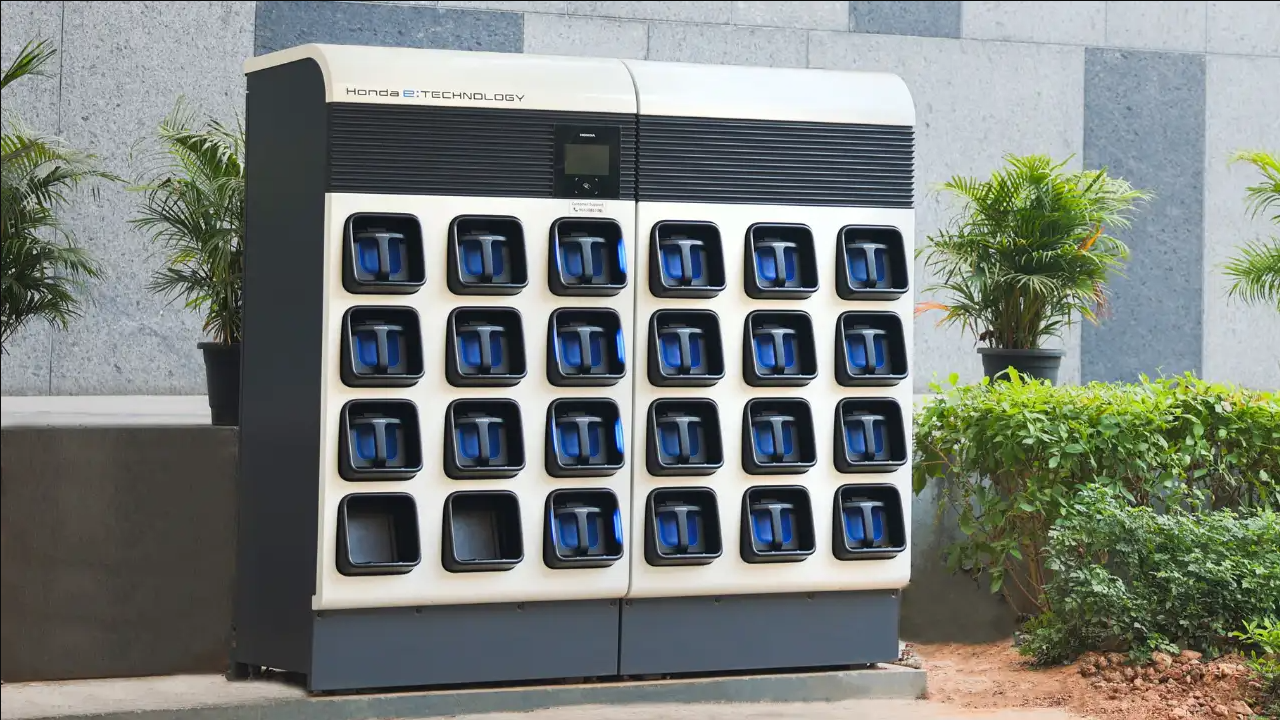
In contrast, the Activa e: relies solely on Honda’s battery-swapping network, which currently exists only in Bengaluru, Mumbai, and Delhi. If you don’t live in those cities, or if you can’t reach a swap station, the Activa e: just doesn’t make sense for daily use.
Battery Swapping Limits the Activa e:’s Appeal
Battery swapping works beautifully in markets like Taiwan and China, but only because networks there are extremely dense. In India, Honda’s grid is too small to offer real convenience. For most buyers, the risk of not finding a swap station nearby-or making long detours just to get a charged battery-is a deal-breaker.
QC1’s portable charging model avoids this problem, but has its own limitations, more so for Indians who live in apartments without fixed parking or private charging points.
Competition Leaves Honda Behind
The Indian EV scooter market has rapidly matured over the last couple of years. Brands like TVS, Bajaj, Ola Electric, and Ather have iterated over their products with real-world feedback. They offer:
- practical charging options
- the stronger real-world range
- better performance
- wider availability
- more mature software and battery management systems
Against such competition, the Activa e: comes across as underpowered, under-equipped, and shackled by its infrastructure needs. Even committed Honda enthusiasts looked elsewhere.
Love for the Petrol Activa in India Does Not Translate to the Activa e:
Walk into any Indian city, and you will see a petrol Honda Activa at nearly every corner-it’s a scooter that became an emotion for millions. Families, delivery riders, students, and commuters swear by its reliability and low maintenance cost.
But when the Activa badge jumped into the EV world, buyers simply didn’t follow. Price played a part too: the Activa e: costs ₹1.17 lakh while the QC1 comes in at ₹94,422 (ex-showroom Delhi). Rival scooters with home charging – like the TVS iQube and Bajaj Chetak – are offering more range, better practicality and stronger real-world performance at similar prices.
Brand loyalty couldn’t compensate for these shortcomings.
- What Honda’s Decision Signals
- Stopping production is a way for Honda to take a time-out without leaving the field. Now, it faces several options:
- discount heavily and clear stock
- stop producing one or both models
- bring revised versions with better range and performance
expand infrastructure to support its battery swap strategy Honda knows it cannot afford to misjudge the market again. Electric mobility in India is growing aggressively, and while Honda arrived late, it cannot stay behind for long in a country transitioning toward clean mobility. For now, the production stoppage gives Honda the breathing room it needs to rethink its EV strategy-something the brand must get right if it wants the Activa name to remain relevant in the electric era.

Siddharth is a Kochi-based mechanical engineer with a lifelong fascination for cars. His weekend passion involves analyzing new engines, driving technologies, and India’s growing electric car market. He brings technical depth with everyday readability.