
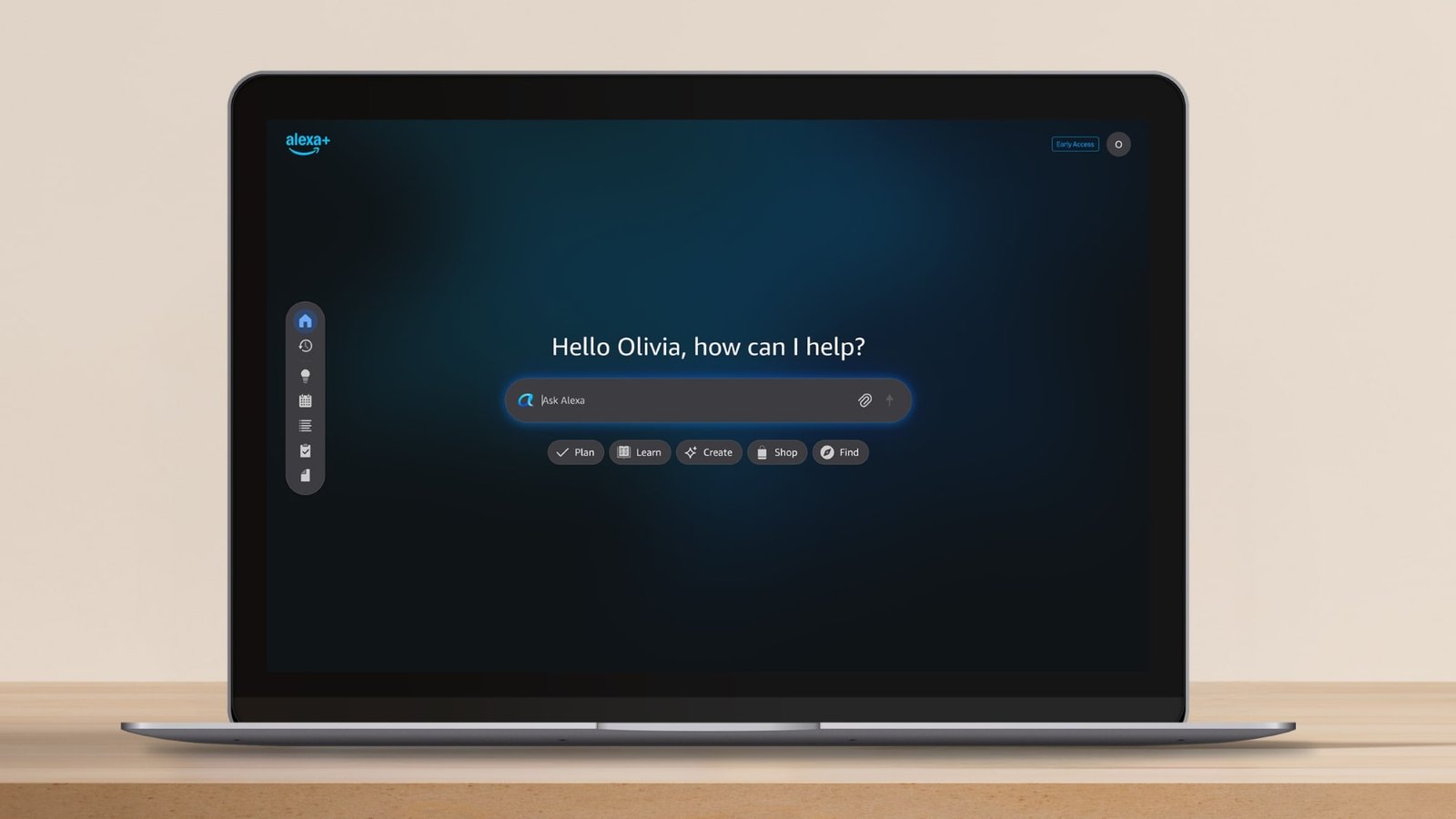
Amazon has introduced Alexa.com, marking a major expansion of its Alexa+ assistant into the web browser. The move signals Amazon’s push to make Alexa available wherever users spend time online. According to the company, Alexa.com is now rolling out to all Alexa+ Early Access customers. This rollout brings the same assistant experience found on Echo devices and mobile apps directly to desktops and laptops. The launch reflects a wider industry trend where AI assistants move beyond voice into multi-surface experiences. Over the past nine months, Alexa+ has evolved rapidly since its initial release. Amazon says usage patterns show deeper engagement, including longer conversations and higher task completion. Customers are asking more questions, shopping more often, and requesting recipes at a faster rate. These insights, Amazon notes, shaped the decision to expand Alexa+ to the web. With Alexa.com, users can interact through text while still triggering real-world actions. This change aims to make Alexa feel more like a personal assistant than a search tool. The first 120 words highlight why this matters, as Google News values clarity, timeliness, and direct relevance.
Globally, more than 600 million Alexa-enabled devices have been purchased so far. In India, Alexa devices have seen strong adoption in urban households and smart homes. Amazon believes the browser is the missing link in daily assistant usage. Many users plan, research, and work on desktops during the day. Therefore, Alexa.com fits naturally into office and home workflows. Instead of switching between apps, users can now stay in one window. Alexa.com allows quick answers alongside task execution. This includes planning trips, writing content, and managing schedules. Unlike basic chat tools, Alexa+ connects information with actions. Amazon positions this as the core difference from traditional assistants.
At its core, Alexa.com mirrors the capabilities of Alexa+ across devices. Users can access previous conversations, saved preferences, and personalized settings. This persistent context allows continuity between phone, home, and browser. For example, a task started on Alexa.com can continue on an Echo device later. This design supports Amazon’s vision of an always-available assistant. The experience also aligns with growing expectations for cross-device AI services. Industry analysts note that such continuity improves trust and daily usage. Amazon appears focused on reducing friction across digital touchpoints.
Meal planning is one of the standout use cases highlighted by Amazon. Users can ask Alexa for a full weekly menu tailored to preferences. Alexa can consider protein needs, sugar limits, and school-friendly lunches. Once meals are planned, Alexa can add required items to Amazon Fresh or Whole Foods carts. This process compresses hours of planning into minutes. In Indian homes, where meal planning is routine and detailed, this feature may see strong interest. Regional dietary needs can also shape how Alexa adapts suggestions. Amazon has previously localized Alexa skills for Indian users. The company may extend similar localization to Alexa.com over time.
Life administration is another area where Alexa.com aims to help. Users can upload documents, emails, or images through the browser. Alexa+ can then extract key details from those files. Appointments, reminders, and notes can be added automatically. This includes remembering vaccination dates or school schedules. Such features reduce manual data entry. Users can later recall information through any Alexa-enabled device. For busy families, this unified memory system could simplify daily planning. Observers say this moves Alexa closer to a digital personal secretary.
Smart home control is also integrated into the Alexa.com interface. Users can manage lights, thermostats, and locks from the same screen. Security camera feeds and door status are accessible without switching apps. This is useful for users working on laptops during the day. Instead of using voice commands, actions can be triggered silently. In apartments and offices, this can be especially convenient. India’s smart home market is still growing, yet adoption is increasing. Alexa.com may encourage more browser-based smart home management.
Cooking support remains a strong focus for Alexa+. With Alexa.com, users can paste recipe links directly into the chat. Alexa can then customize recipes based on dietary restrictions. Ingredients can be converted into shopping lists instantly. During cooking, Alexa can display steps on Echo Show devices. Timers and instructions remain hands-free. This connected flow links discovery, shopping, and execution. Food content continues to perform well on Google Discover. Therefore, Amazon’s emphasis on recipes aligns with user interest trends.
Entertainment discovery is another area addressed by Alexa.com. Users can explore movie themes and recommendations on the browser. Alexa considers viewing history and preferences when suggesting content. Once a choice is made, Alexa can recall it on Fire TV devices. This removes repeated searches across platforms. In households with shared screens, this feature can reduce decision fatigue. Streaming consumption remains high across India. Amazon appears to position Alexa as a neutral discovery layer across services.
The interface design of Alexa.com focuses on quick navigation. A sidebar provides access to recent chats, calendars, and lists. Users can switch tasks without losing context. Files shared with Alexa are also accessible from the same space. This design supports multitasking, especially for desktop users. Amazon says the experience complements the redesigned Alexa mobile app. The app follows an agent-forward design, prioritizing actions over commands. Together, these interfaces aim to unify Alexa across surfaces.
From a newsroom perspective, this launch reflects Amazon’s broader AI strategy. Major tech firms are racing to embed assistants everywhere. Google, Microsoft, and Apple have similar ambitions. However, Amazon’s strength lies in commerce and smart homes. Alexa.com leverages these advantages by connecting browsing with buying and control. Analysts suggest this could strengthen Amazon’s ecosystem lock-in. At the same time, privacy and data use will remain under scrutiny. Amazon states that users must be logged into their Amazon account.
For Google News Publisher Center standards, the story maintains a neutral and factual tone. It avoids promotional language while explaining practical impact. The lead paragraph establishes who, what, and why clearly. Regional relevance is addressed through usage context and market trends. The structure supports topical authority around AI assistants and smart ecosystems. For AMP and newsroom CMS adaptation, the content uses clear sentences and minimal formatting. This improves load performance and readability on mobile.
In summary, Alexa.com marks a significant step in Amazon’s assistant journey. By bringing Alexa+ to the web, Amazon expands daily use cases. The move reflects changing user habits across devices. As AI assistants evolve, availability and action matter more than novelty. Alexa.com positions Amazon to compete strongly in this space. Early Access users can start using the service now. Wider availability may follow based on feedback and adoption.

Abhijeet is a software engineer who moonlights as a tech writer. His love for gadgets, mobile innovations, and smart devices keeps him closely connected to India’s fast-growing tech scene. When he’s not coding, he’s usually testing the latest earbuds or Android updates.